Easy 5-Minute Crochet Snowflake Free Pattern Tutorial
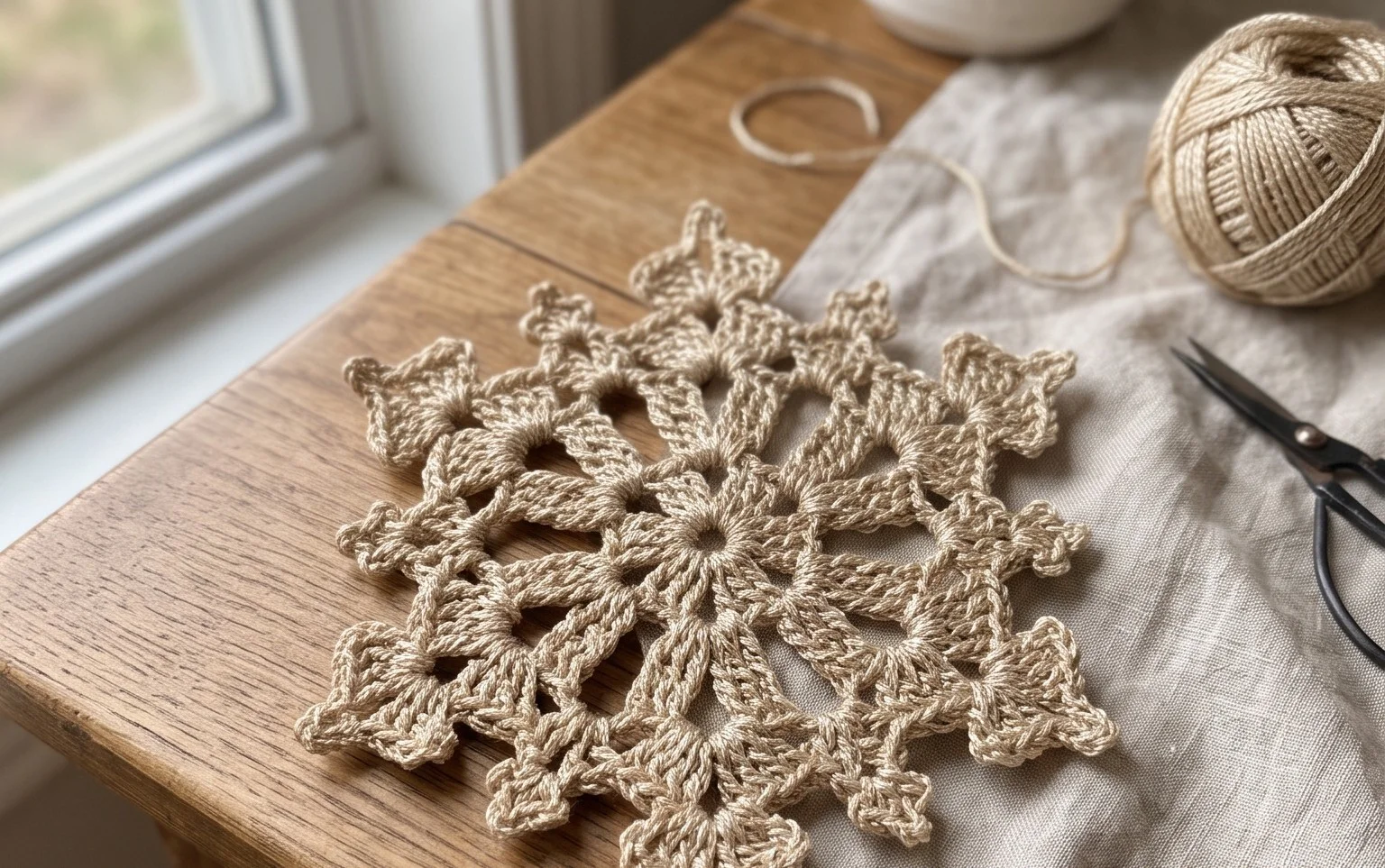
A small crochet snowflake takes shape from a few loops and pointed tips, with a light, lacy feel that looks lovely against a window or tucked onto a wrapped gift. This quick motif suits beginners who want to practise working into chain spaces, as well as gift makers and home decor fans who enjoy making seasonal details by hand. The short repeat makes it satisfying to finish in one sitting, and a handful of snowflakes can become a garland or tree decorations. In this pattern, you’ll learn how the stitches build the snowflake’s arms and how to keep the points even. Use the suggested yarn and hook for a delicate finish, or choose another fiber to change its size and feel.
Why You’ll Love This Pattern
This simple cotton washcloth is worked in single crochet rows, so the fabric is firm, useful, and easy to keep track of. It suits newer crocheters who want to practise even tension without shaping or joining rounds. One ball of cotton usually provides enough yarn, and the repetitive rows make the project easy to pick up between other tasks. A finished cloth also makes a practical small gift, especially when paired with a bar of soap.
The rows were easy to follow, and I liked having a useful project for practising even stitches.
— Sample maker, beginner crocheter
Pattern Overview & Skill Level
- Skill Level: Beginner. You need to chain, single crochet, and turn your work.
- Approximate Time: About 2–3 hours, depending on your pace and tension.
- Construction: A flat square made in turned rows, without seams or separate pieces.
- Finished Dimensions & Sizing: Approximately 8 × 8 in (20 × 20 cm) after washing and drying flat. The finished size can vary with your yarn, hook, and tension.
Materials & Supplies Needed
- Yarn: Approximately 90 yd (82 m) of worsted-weight cotton yarn, weight #4, in one color. Cotton absorbs water and tolerates regular washing.
- Hook: 5.0 mm / H-8 crochet hook. Use a hook that gives you a firm but flexible fabric.
- Notions: Tapestry needle for weaving in the ends, scissors, and a ruler or measuring tape.
- Substitutions: A similar amount of cotton or cotton-linen yarn can work. A thicker yarn makes a larger, heavier cloth; a thinner yarn makes a smaller, lighter cloth. Acrylic is less absorbent than cotton, so it is not the best choice for a washcloth.
Gauge: About 13 single crochet stitches and 13 rows measure 4 in (10 cm) in the pattern stitch. Gauge is a guide rather than a requirement for a usable cloth. If your swatch is much smaller or larger, change hook size and check again before starting.
Stitch Guide & Abbreviations (US Terms)
- ch = chain.
- sc = single crochet. Insert the hook into the stitch, yarn over and pull up a loop, then yarn over and pull through both loops.
- st(s) = stitch(es).
- rep = repeat.
The turning chain does not count as a stitch in this pattern. Work the first single crochet into the first stitch of each row, directly beside the turning chain. This keeps the side edges straight and helps prevent the stitch count from changing.
Step-by-Step Pattern Instructions
Chain 27 to begin. The first 26 chains form the foundation for the cloth; the remaining chain is the turning chain. Work into the second chain from the hook, and keep the same number of stitches in every row.
Washcloth
- Row 1: Sc in the second ch from the hook and in each ch across. Ch 1 and turn. (26 sts)
- Rows 2–26: Sc in each st across. Ch 1 and turn. (26 sts per row)
After Row 26, fasten off, leaving a tail of about 6 in (15 cm). Pull the yarn through the last loop to secure it. Thread the tail onto a tapestry needle and weave it through several stitches on the wrong side. Change direction once or twice so the end is less likely to work loose during washing. Weave in the starting tail in the same way.
Lay the cloth flat and measure it. If the edges curl slightly, dampen the fabric and smooth it into a square; avoid stretching it hard enough to distort the stitches. Wash and dry the finished cloth before first use, following the yarn label.
Care & Washing Instructions
- Wash cotton in cool or warm water according to the yarn label; use a gentle cycle if preferred.
- Dry flat for the neatest shape, or tumble dry only if the yarn label allows it.
- Reshape the damp cloth by smoothing the edges square; blocking is optional for this practical item.
Pro Tips & Common Mistakes to Avoid
- Keep your starting chain relaxed. A tight foundation chain can pull the bottom edge inward; use a slightly larger hook just for the chain if needed.
- Count the 26 stitches at the end of each row. Missing the final stitch makes the cloth narrower, while accidentally working into the turning chain can add an unwanted stitch.
- When weaving in ends, pass the needle through the backs of several stitches and change direction. A short end that is only threaded through one row can loosen with repeated washing.
- To make a wider or narrower cloth, adjust the starting chain while keeping one fewer stitches than chains. Each extra stitch adds roughly ¼ in (6 mm) at the stated gauge, and a wider cloth uses more yarn. Add or remove rows to adjust the length.
Frequently Asked Questions
Can I use a different cotton yarn?
Yes. Choose a smooth yarn close to worsted weight and check that it is suitable for frequent washing. A different yarn may change the finished size, thickness, and absorbency, so make a small swatch if those details matter.
How can I make the washcloth larger?
Add chains for width and rows for length. At the stated gauge, each stitch is about ¼ in (6 mm) wide, but your own tension affects the measurement. Larger dimensions also require more yarn than the estimated 90 yd.
Is this washcloth suitable for a first crochet project?
Yes, if you can make a chain and single crochet. The main challenge is keeping 26 stitches in every row, so count as you go and check the edges before turning.
Can I sell washcloths made from this pattern?
Check the pattern designer’s terms before selling finished items, and follow any requirements for credit or commercial use. If you sell them, describe the fiber accurately and include care information for the yarn you used.
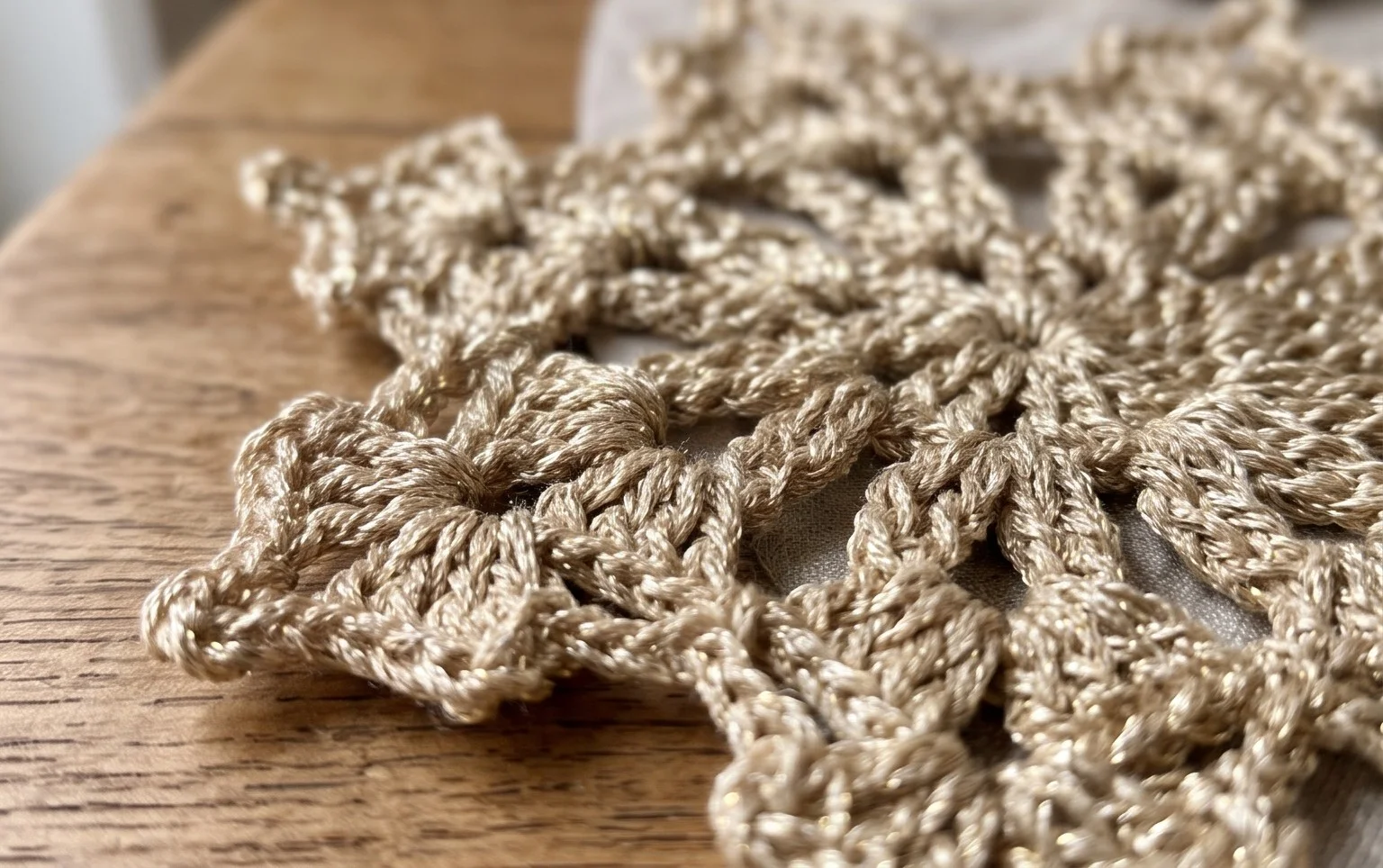
Your finished snowflake is a small piece of winter decor with crisp points and an airy crochet texture, ready for a tree, a card, or a gift tag. For a simple variation, use a slightly thicker cotton yarn to make a larger motif, checking that your chain spaces stay loose enough to form neat arms. You can also make a set in different shades of white and pale blue for a handmade garland. If you make one, share a photo on Pinterest or your favorite social media platform. Then browse the blog for more free crochet patterns to enjoy between seasons.