Easy Granny Mushroom Crochet Pattern for Beginners
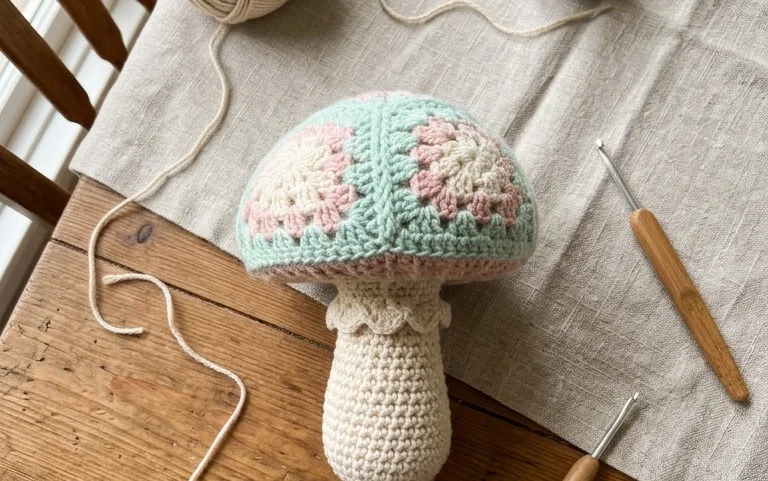
Small granny clusters give this crochet mushroom its familiar patchwork look, with rounded caps and a soft, textured finish that feels right at home on a shelf or tucked into a gift basket. The project suits beginners who know how to hold a hook, as well as experienced crocheters who want a cheerful make that does not take over an afternoon. It is a handy choice for handmade gifts, seasonal decorating, or adding a little woodland detail to a craft room. You will work through the granny-style stitch pattern and shape the mushroom from its crocheted pieces, with clear guidance on keeping your stitches even and your edges neat. Choose classic red and cream, or use colors that match your room or recipient.
Why You’ll Love This Pattern
A firm cotton fabric and simple single crochet stitches make this square dishcloth useful at the kitchen sink. The pattern uses one stitch throughout, so you can focus on keeping the edges straight rather than learning a complicated repeat. It is a practical first project for someone who has made a foundation chain and wants to practise even rows.
The 8-inch size works well for everyday washing, and one ball of cotton yarn is usually enough. The plain fabric also makes it easy to see where each stitch goes. Work one while watching a show, or make several from the same yarn for a coordinated set.
The rows were easy to keep track of, and the cotton cloth came out flat after washing. I made one in an afternoon.
— Maya, beginner crocheter
Pattern Overview & Skill Level
- Skill Level: Beginner. You need to know how to chain and single crochet.
- Approximate Time: About 2–3 hours, depending on your pace and tension.
- Construction: The dishcloth is crocheted flat in back-and-forth rows, then fastened off. There is no seam or border.
- Finished Dimensions & Sizing: Approximately 8 × 8 inches (20 × 20 cm) after washing and drying flat. Your result may vary slightly with tension.
Materials & Supplies Needed
- Yarn: About 100 yards (91 m) of worsted-weight (#4) 100% cotton yarn. Choose one color, or use a small amount of a second color for the final row if you fasten off and rejoin.
- Hook Size: 5.0 mm / H-8 crochet hook.
- Notions: Tapestry needle for weaving in the tail and scissors. A ruler or tape measure helps check the finished size.
- Substitutions: A similar-weight cotton or cotton-linen blend is suitable. A thinner yarn makes a smaller, lighter cloth; a thicker yarn makes a larger, bulkier one and uses more yardage. Acrylic yarn is less absorbent and may not suit a dishcloth used for drying dishes.
- Gauge: 14 single crochet stitches and 16 rows measure about 4 inches (10 cm) in the stitch pattern. Make a small swatch if exact sizing matters. Change hook size to adjust your gauge before starting.
Stitch Guide & Abbreviations (US Terms)
- ch: Chain. Yarn over the hook and pull through the loop already on the hook.
- sc: Single crochet. Insert the hook in the stitch, yarn over and pull up a loop, then yarn over and pull through both loops on the hook.
- st / sts: Stitch / stitches.
Work under both top loops of each stitch unless the pattern says otherwise. Turning chains do not count as stitches in this pattern, so do not work into them on the next row.
Step-by-Step Pattern Instructions
Dishcloth
Starting chain: Ch 29. The first chain is the turning chain and does not count as a stitch.
Row 1: Sc in the second ch from the hook and in each ch across. Turn. (28 sts)
Row 2: Ch 1, sc in each st across. Turn. (28 sts)
Rows 3–32: Repeat Row 2, keeping the turning chain loose and working into the first sc of each row. Turn after every row. Each row has (28 sts)
After Row 32, the piece should measure close to 8 inches long when laid flat. If it is notably shorter or longer, measure your gauge before deciding whether to add or remove rows. For a square, aim for the length to match the width.
Finishing
After the final row, cut the yarn, leaving a tail about 6 inches (15 cm) long. Pull the tail through the loop on the hook to fasten off. Thread it onto a tapestry needle and weave it back and forth through several stitches along the edge. Weave in the starting tail in the same way, then trim the ends close to the fabric without cutting the stitches.
Lay the cloth flat and gently smooth its corners and sides. Wash it before using it to remove any handling residue and let the cotton settle into its finished shape.
Care & Washing Instructions
- Wash cotton dishcloths with like colors in warm water, about 40°C (104°F), or follow the yarn label if it gives a lower limit.
- Dry flat or tumble-dry on low heat; reshape the corners while the cloth is damp.
- If the cloth looks uneven after washing, smooth it flat to block it, then let it dry completely before storing.
Pro Tips & Common Mistakes to Avoid
- Keep your tension relaxed and consistent. A tight starting chain can pull the lower edge in, so make the chain with the same ease as your stitches or use a hook one size larger for the chain only.
- Count the 28 stitches at the end of every row, especially the first and last stitches. Missing the final stitch can make the dishcloth narrower one row at a time.
- Weave in both yarn tails through several stitches in different directions. Cotton can shift with repeated washing, so avoid leaving a short tail or relying on a single pass.
- To change the size, add or remove starting chains in pairs so the stitch count changes evenly, then work enough rows to match the width. A larger cloth takes more yarn and time; a smaller one uses less.
Frequently Asked Questions
Can I use a different yarn fiber for this dishcloth?
Use cotton or a cotton blend for a cloth that absorbs water and tolerates regular washing. Wool may felt, and acrylic is less absorbent, so both behave differently at the sink. Check the yarn label for washing instructions before substituting.
How can I make the dishcloth larger or smaller?
Change the foundation chain by an even number, then work the same number of rows as needed to make the piece square. Keep in mind that a larger cloth uses more yarn, and a different yarn weight changes the finished texture and measurements.
Is this pattern suitable for a first crochet project?
Yes, if you can make a chain and single crochet. The main challenge is keeping the sides straight. Count 28 stitches after each row and make sure you work into the last stitch before turning.
May I sell dishcloths made from this pattern?
Check the designer’s terms before selling finished items, and follow any rules about pattern credit or commercial use. If you sell the cloth, describe the yarn fiber accurately so buyers know how to care for it.
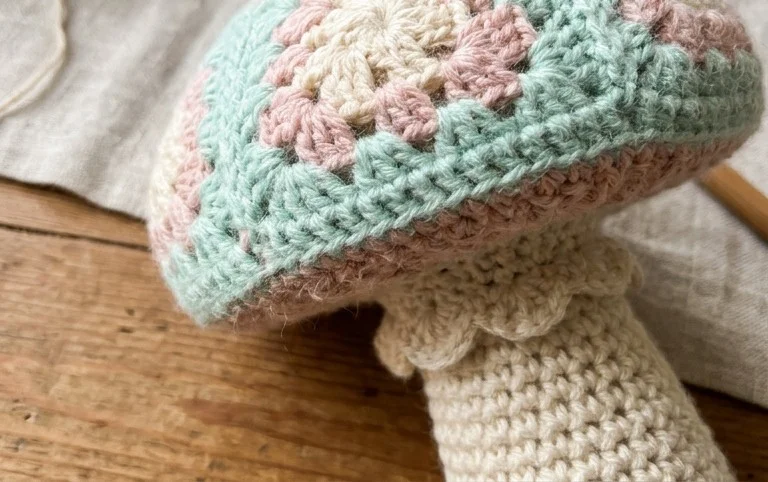
Your finished mushroom has a cozy, handmade texture and makes a sweet little accent for a shelf, desk, or gift basket. If you want to give the design a different feel, swap the traditional red cap for sage, mustard, or a soft pastel shade while keeping the same yarn weight. Take a quick photo beside a plant or a stack of books and share it on Pinterest or your favorite social platform; the texture shows up especially well in natural light. If you enjoyed making this small project, explore more free crochet patterns on the blog for your next evening or weekend make.